

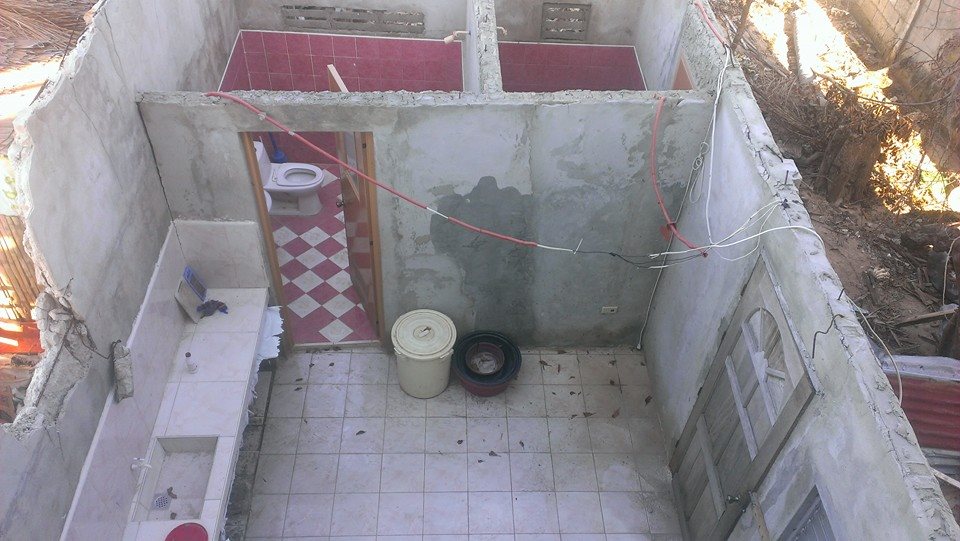
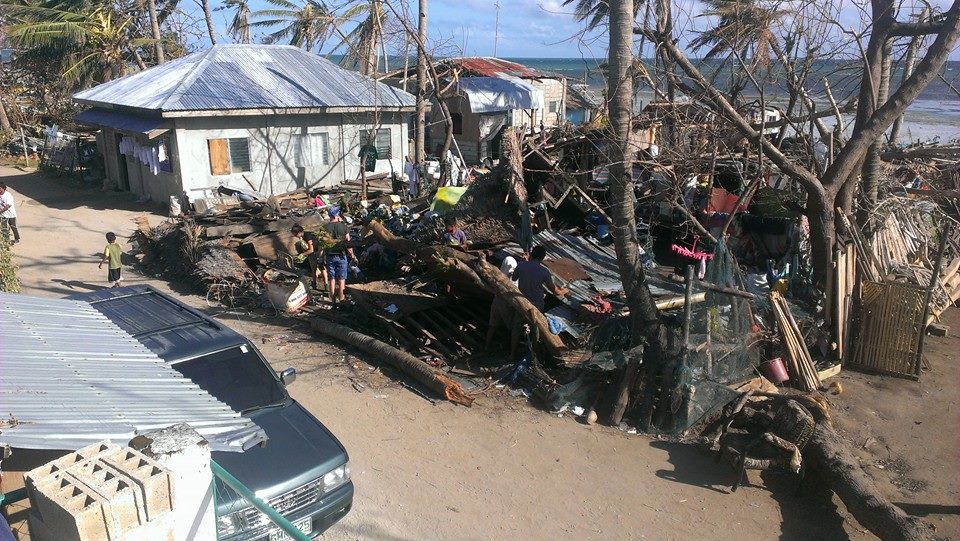
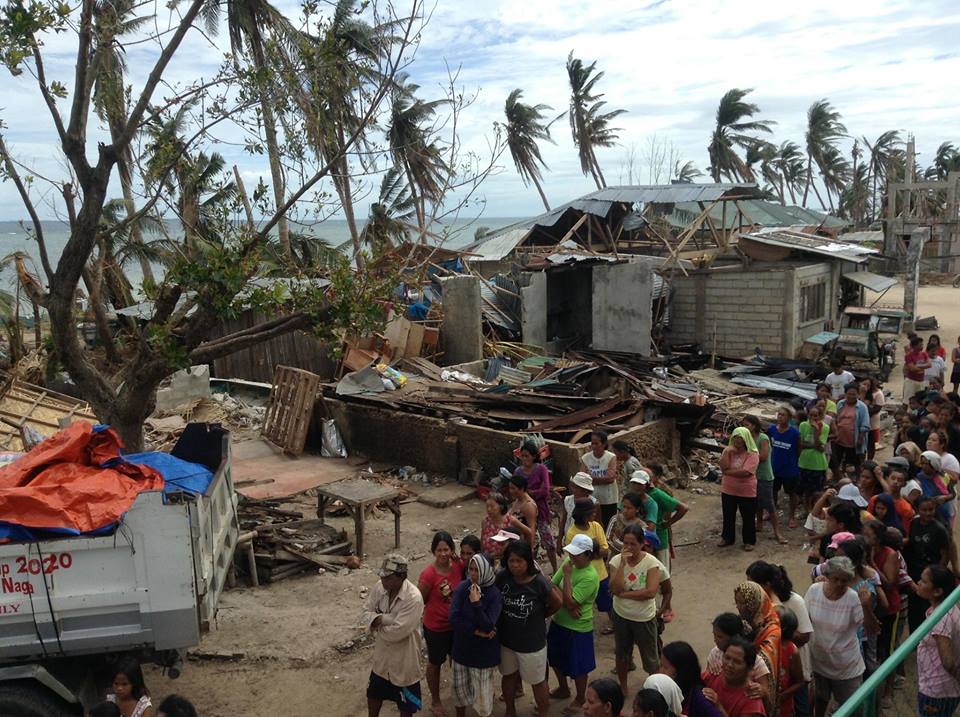
I had arrived on Bantayan for the first time in January 2013 to witness and help with building construction. When I returned I visited the same place, but this time in the aftermath of Typhoon Haiyan. Whilst the most places suffered considerable damage, the completed houses in the village went virtually untouched. What struck me most was that the people within these houses sat their complacently not caring about what had happened to those in the community surrounding them, but going on with their lives, or complaining about some flapping iron on one of the unfinished houses (as if the noise was the thing that kept them up at night, this may or may not have been the case).

Building on Bantayan – January 2013
We discovered later that the organisation managing the construction had in fact undergone a restructure, new management lines, and new processes. This impacted the village with resources being held back until a list of criteria had been checked off again, whilst restructure may be required it brings into question the need to apply it to a construction site on the verge of completion. This had resulted in a few months of no construction and a degrading of the community and team atmosphere which was being built during the first visit. Seeing almost complete houses whilst most of the population has just lost theirs, just does not feel right! The interesting thing is that focus always was, and still is on building the homes, not the livelihoods.

Materials were the resource in highest demand after the typhoon.
It’s now 3 months since that visit, and that reflection has been at the forefront of my mind ever since. I was fortunate enough to have a contrasting experience in Indonesia whilst staying with members of Gerakan Kepedulian (GK Indonesia). The contrast was that on Bantayan there was little preparation work to build a sense of community and values, whilst in the Indonesian villages there was a lengthy period (1-2 years) before they even entered the village. What this produced was a sense of establishment and community, whereas the Bantayan village felt removed from the surrounds and unaware of the immediate destruction which had occurred only a couple of hundred meters away.

Bantayan Village after Haiyan – November 2013
These experiences showed a few important lessons to those who would help give a hand to alleviate poverty and encourage development. Firstly if we are going to build a “village” of houses, then we should also build a village “spirit” for the village, creating the sense of community and common values is possibly more important than building the village in the first place. If all we create are complacent members who feel it is their right to receive “assistance” from the outside world, have we really helped at all? and if in fact we have removed independence of these people, then who is responsible? we are.

Jack runs community programs within GK Indonesia
I recently finished a mind changing book called “We Do Know How” by James T. Riordan, what it outlined time and again was the need to create jobs and raise incomes to help the poor rise through their own work, as a sustainable approach to alleviating poverty. In contrast giving handouts or anything which acted as a “freebie” could be seen to undermine the independent nature of individuals and instead create dependence. The point is that for many charity organisations, they depend on poor people relying on them for their very existence, to eliminate poverty is to remove the worlds “need” for them.
GK Indonesia is an example of an organisation that seeks to remove beneficiary reliance by doing the sustainable thing, creating jobs for the poor. This emphasis in the real world along with what I have read in literature creates a real hope that we are moving some way to finding the solution to one of the worlds most persistent problems – how to reduce poverty.




 Clive Silcock