
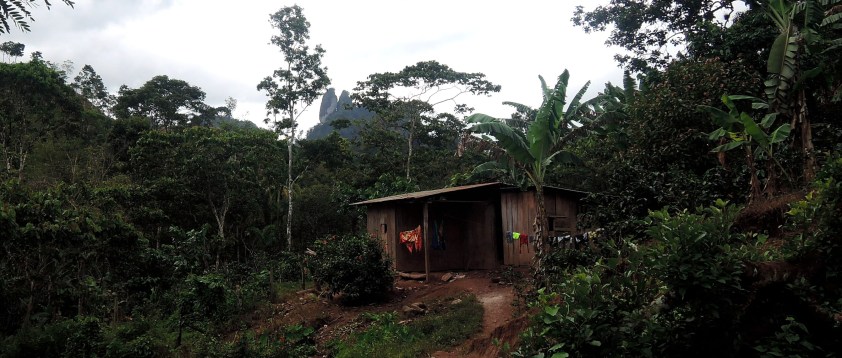
The broken egg structure of Las Piedras de Levay sits mystically over the coffee plantations of Northern Nicaragua.
The most exquisite thing about this trip was that the entire way to and from Las Piedras de Levay, we had no idea where we were until we were back at the hill overlooking town. I’d been advised the trip would take a day there and back, but the reality was that no one really knew, and it provided for the fact that we did not get seriously lost in some fairly mountainous and forested terrain.
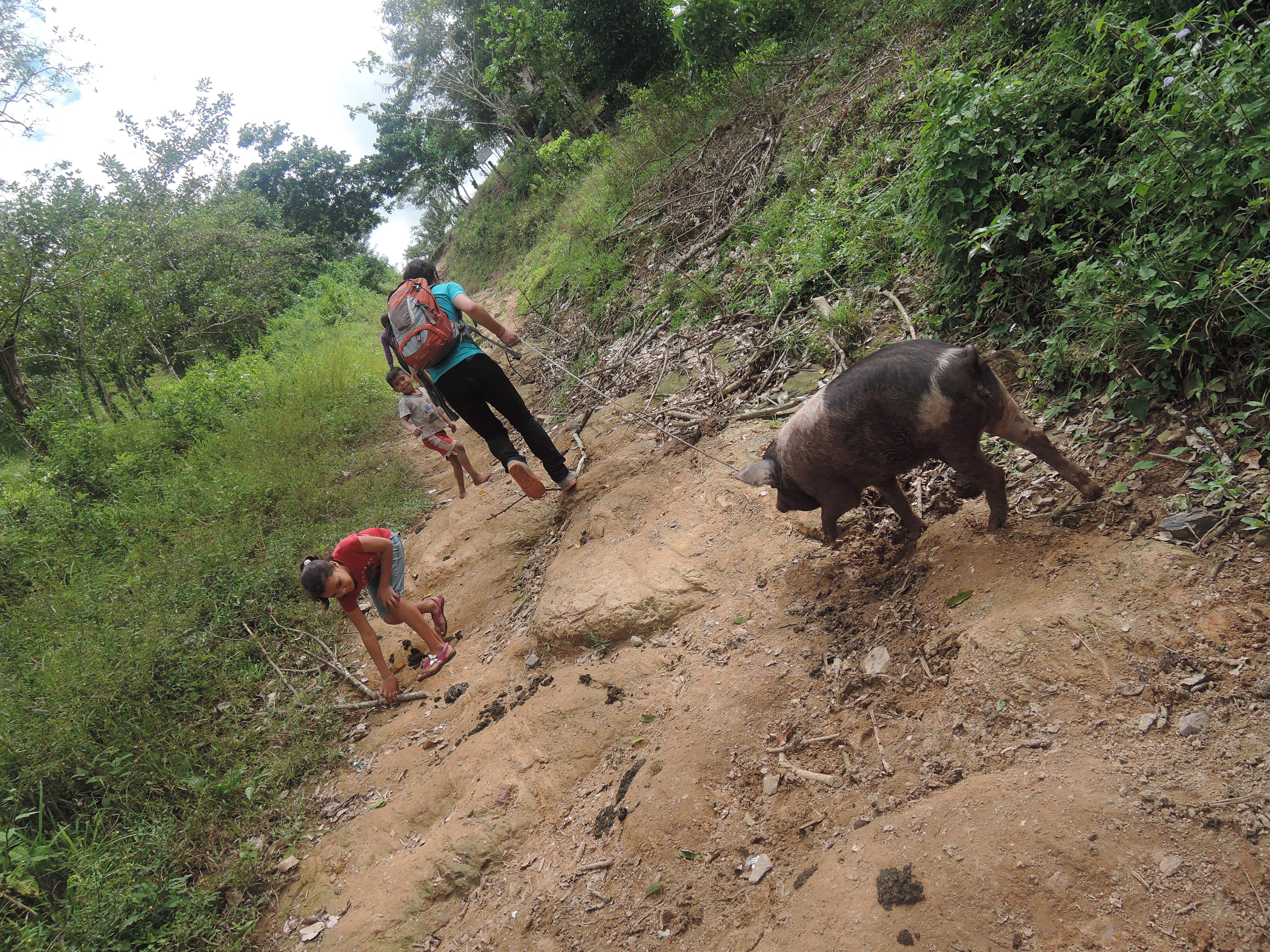
One of my more random experiences occurred on the journey, this time helping a few young boys to walk their pig which they were bringing in for their families New Years Eve celebrations.
I’d been in Nicaragua for five months, I’d had a great time feeding my appetite for Spanish, volunteering and learning a new culture. But over the past three months these previously unheard of rocks in Northern Nicaragua had become a small obsession. My weekends teaching with Alberto in San Jose de Bocay, allowed little time between travelling and teaching for any more than a brief walk around town.
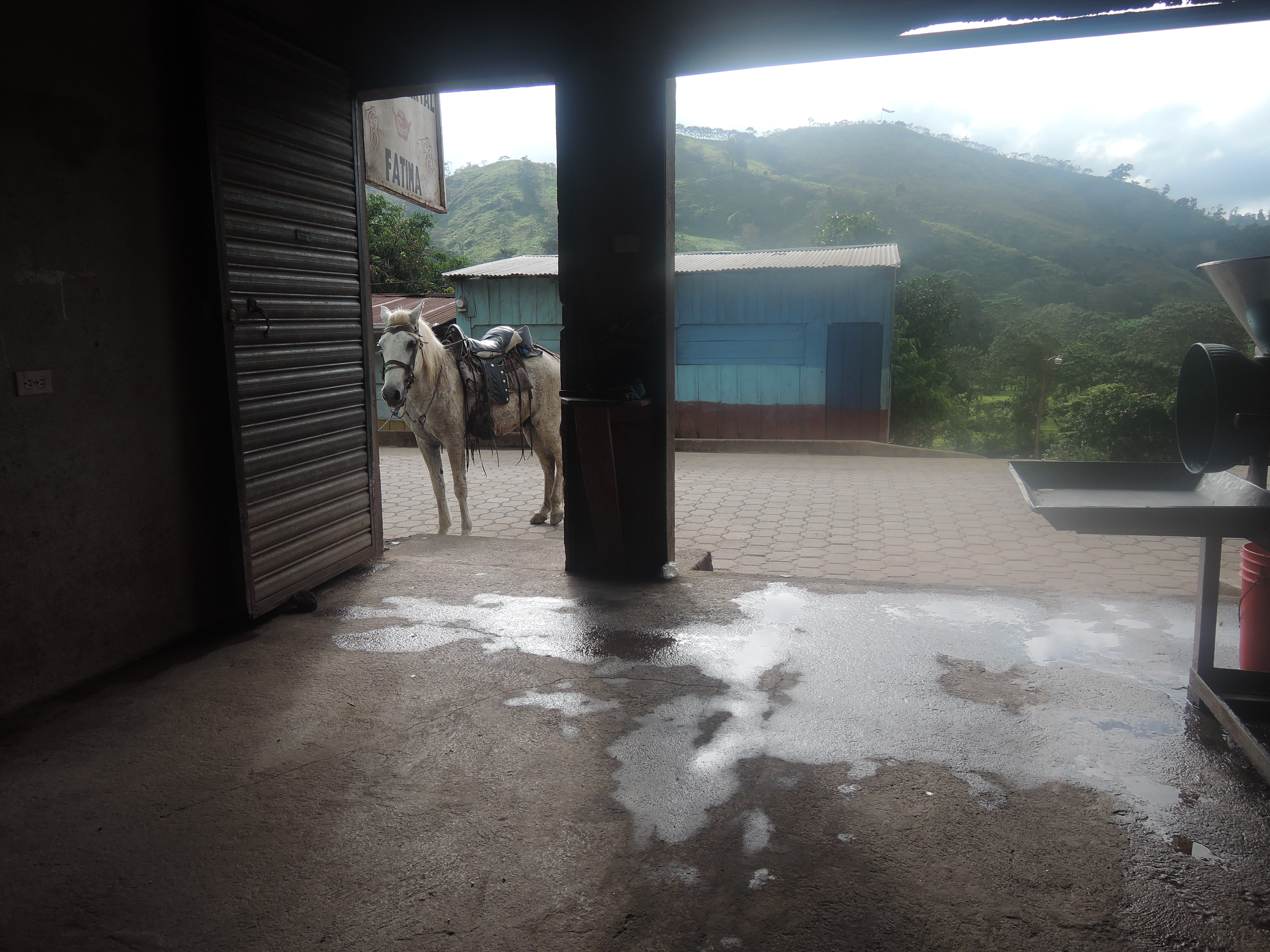
The horse was waiting at the start of the trip, and on reflection it would have been much quicker if I’d taken it.
However with the end of university and school semesters and my return home fast approaching I decided to make the trip back to Bocay for New Years Eve to catch up with some of my friends, experience a very country celebration of New Years, and make that long awaited trip to Las Piedras de Levay.
The funny thing about asking people how to get to Las Piedras was that no one in the community seemed to have been there. Here was this monumental rock formation sitting over the surrounding landscape, and no one I had spoken to had been there. This meant that when asking directions you would be given a general pointer, which included a wide wave of the hand.

The baseball pitch is an important part of every town, and Bocay is no different. Here you can spot Las Piedras poking out from behind the hill in the foreground.
I was lucky enough to have become friends with a local family over my time visiting Bocay. They hadn’t been to Las Piedras themselves but they had heard second hand how to get there, and were willing to try and find the route with me. And so we set out with the two older sisters, their younger sister and brother accompanying and all of us keen for adventure. Even though I was a foreigner and this was their landscape I had an immediate sense of responsibility for the four of them, because although they were guiding me, it was my own idea.

The gentleman and canoe that provided us with a safe crossing of Rio Bocay.
One feature about this trip which made it so exhausting, but also very fun, was that the only time we were ever walking on flat ground was if we were next to a river. The first obstacle in the whole trip being that same river, Rio Bocay. Being on the edge of civilization in a developing country, if you go far from the major cities development more or less does not exist, this includes bridges, and secondary roads. So in this case we had to use a canoe service to cross the river.
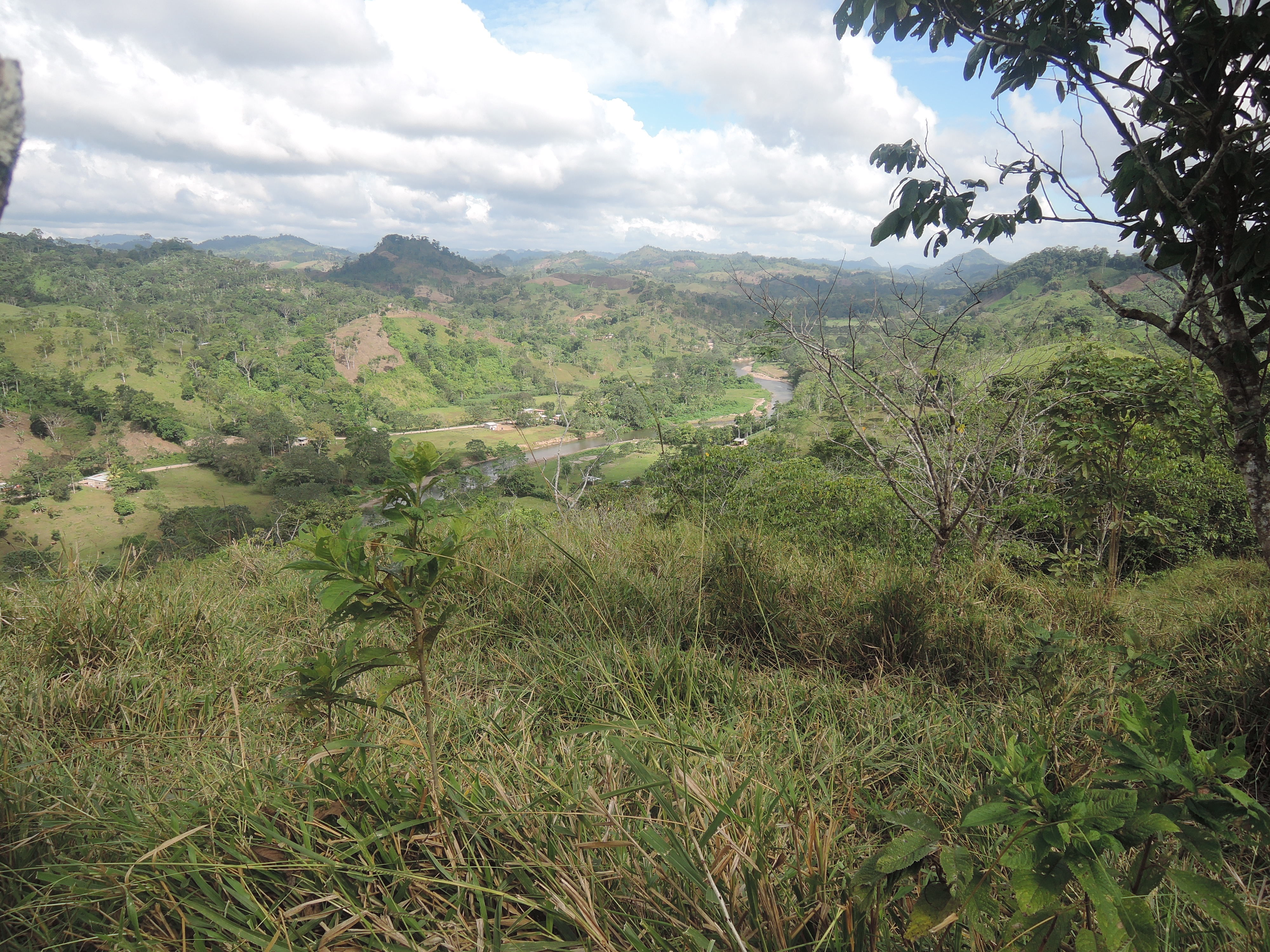
The view back over Rio Bocay.
Crossing the river went without drama, but I was quite conscious that I did not have a waterproof bag, so I opted to kneel in the boat, instead of standing like everyone else. The crossing cost about 20 cents, as there are people that man the canoe ferrying people across either way. After another 30 minute we reached the top of the first hill, which gave a nice view over the river and the township of Bocay.

Looking back towards the township of San Jose de Bocay, as well as an example of the eroded paths that connect the landscape.
After resting for a few minutes we set off to first find a waterfall, eventually we gave up on this, but not after nearly falling into a few sinkholes along the way. Then after much walking, at which point I was starting to think we were lost and it might be a good idea to try and find our way back to Bocay instead, we encountered a boy on a horse who was able to give us some much needed direction.
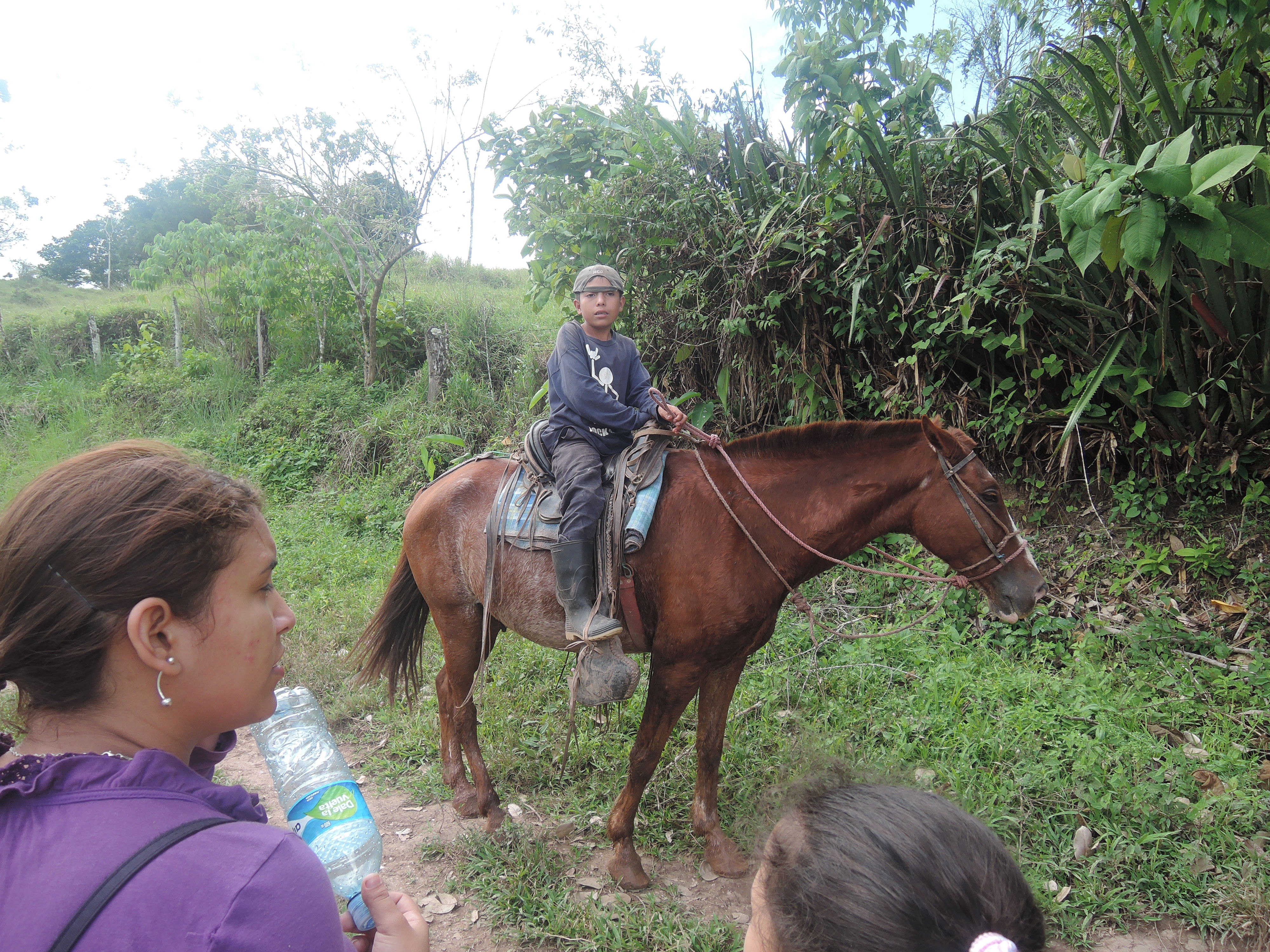
It was thanks to encounters like this that we somehow found our way both to and from Las Piedras. Gracias a todos!
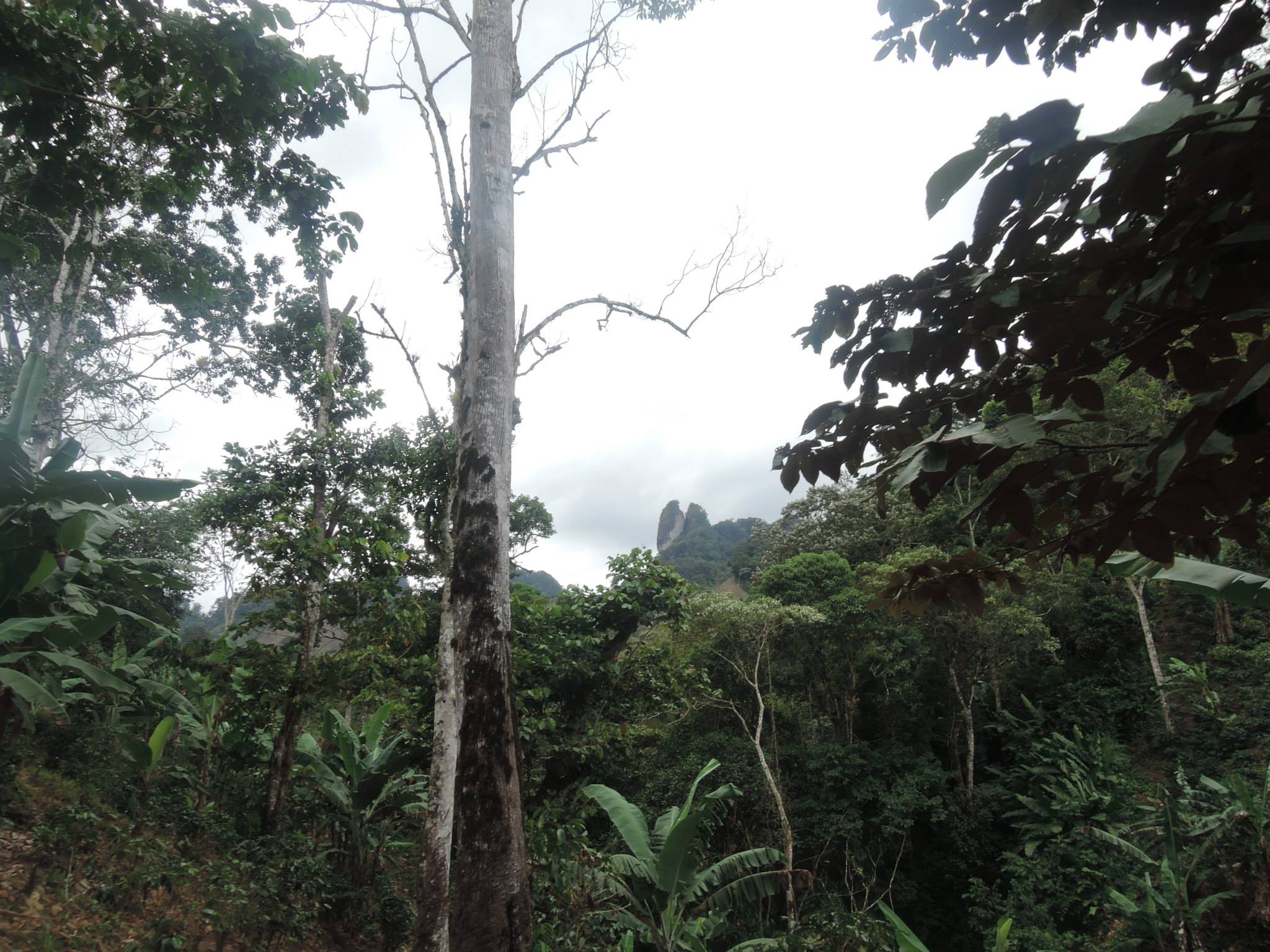
After this point we encountered a lot more locals, and were able to ask each one for directions and the approximate time. These varied a lot, I remember asking one man, and he said 30 minutes, then the next said two hours, and then the next one hour. The one thing that really helped in terms of finding our way was that Las Piedras really do stand out wherever you are in the region.
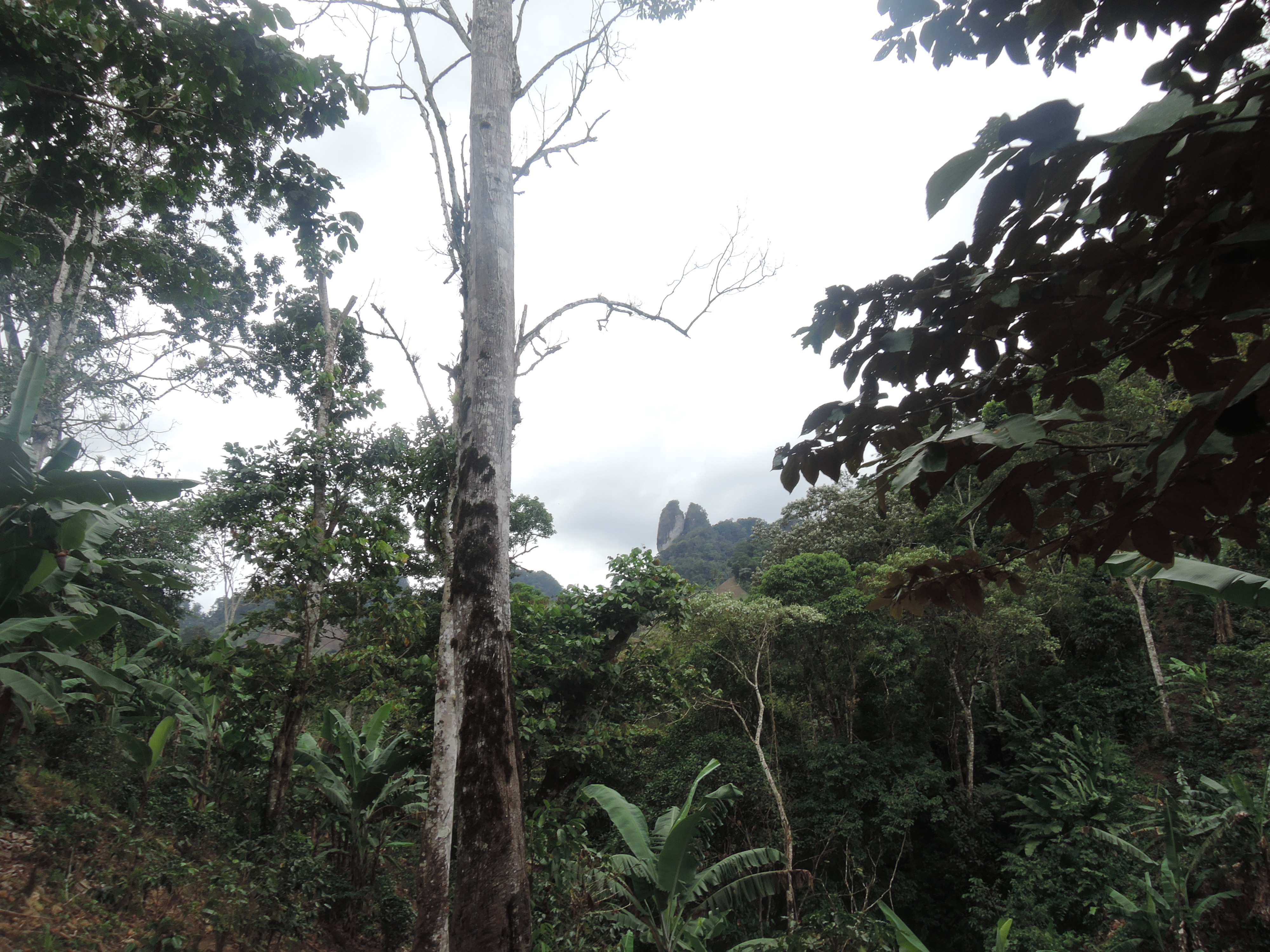
Las Piedras always visible even in the densest forest.
As we got closer the tracks became less visible changing from stock tracks into single file walking tracks, and then later on even they became difficult to differentiate from animal tracks. This made the task of following a track quite difficult, especially as we virtually saw no people in the last hour as we got closer to Las Piedras.

On the unknown path to Las Piedras.
As we got closer we were fortunate enough to meet a local coffee farmer at the base of the final climb to Las Piedras. She advised us that the climb itself was densely forested, with many snakes, and so instructed her two sons to go with us. Somehow, the steep tracks from this point on got even steeper as we followed zig zag tracks through the coffee plantations, before arriving at a maize plantation which provided a last chance to catch our breath before we tackled the jungle surrounding Las Piedras.
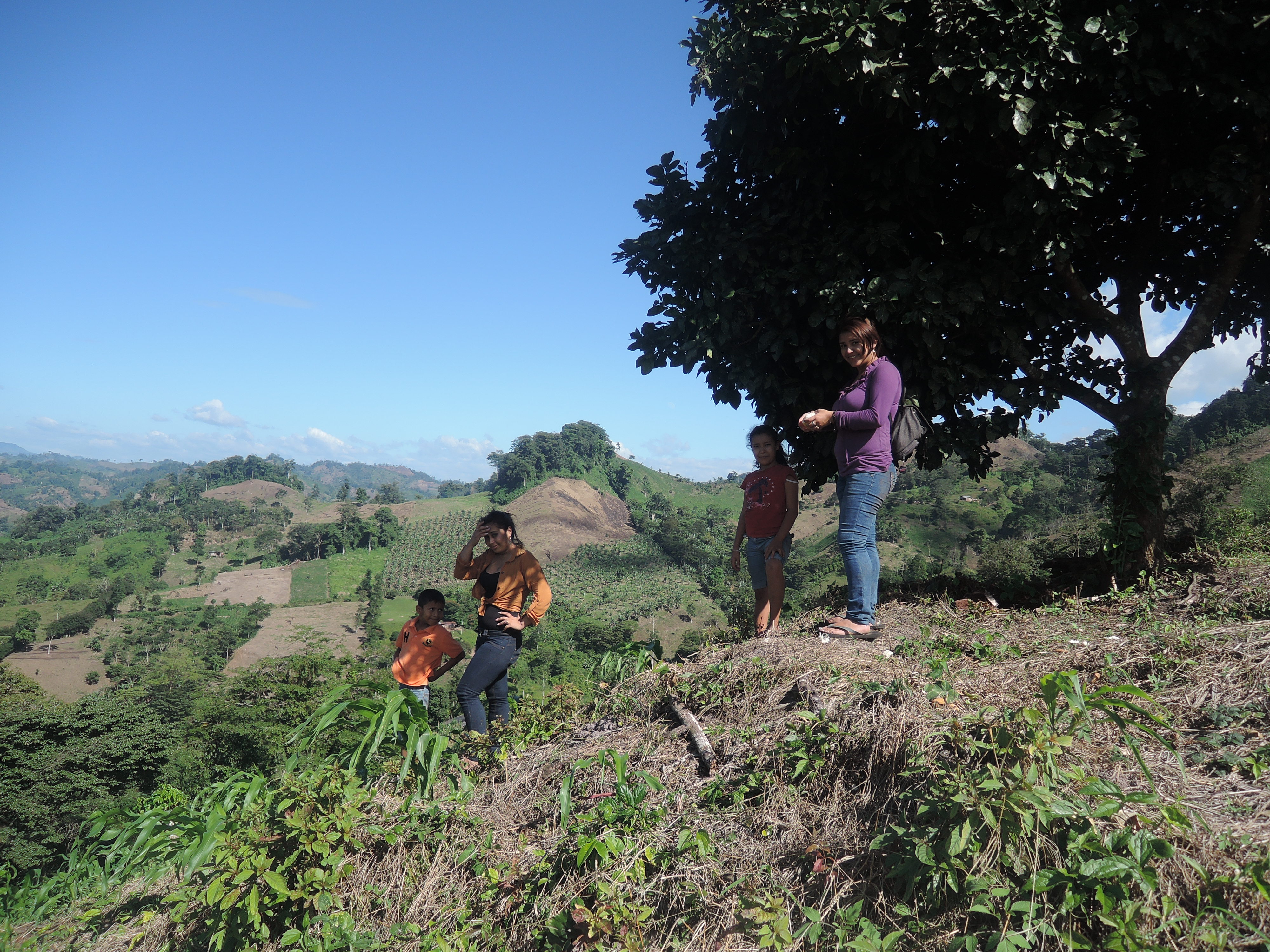
Resting at the base of Las Piedras, where you can clearly see the different farming lots in the background.
From this point on I was very happy to have the two local boys and their machetes with us, because the jungle really was thick, making up this unpleasantness was the spiky bamboo, very steep terrain, vines, slippery rotting plants and loose dirt. It wasn’t great, but it felt real, and most importantly it felt like adventure.

Looking up through the trees in jungle surrounding Las Piedras.
And then after thirty minutes, we broke through the jungle to a spectacular view of the surrounding country side from the smallest of Las Piedras. A small part of me wanted to find a way to the top of the larger ones, but after having to hack a path of our very own to the top of this one and having spent four hours already to get to where we were, not this time. Because although I loved the adventure, I wasn’t so keen on having to find our way back in the dark.

I couldn’t help but think this would be a fun place to come with some rock climbing equipment.
We spent about 20 minutes sitting on top during which time I did have a look to see if there was a way to the top, but after slipping on a cliff side and only just catching myself I decided that it really wasn’t going to happen today. The top of the rock we were sitting on was only a square meter, and in itself didn’t feel like the safest place with vertical drops all around. This made getting down trickier as going up had been like a ladder, but not having the structure it made each step a game of chance on the way down.

The view out past Las Piedras de Levay.
After sliding our way back through the jungle and back through the maize and coffee plantations we stopped at the boys house and gave them some money for their assistance. The lady at the house also let us take some cacao, and I was very grateful for the kick of energy it gave us.
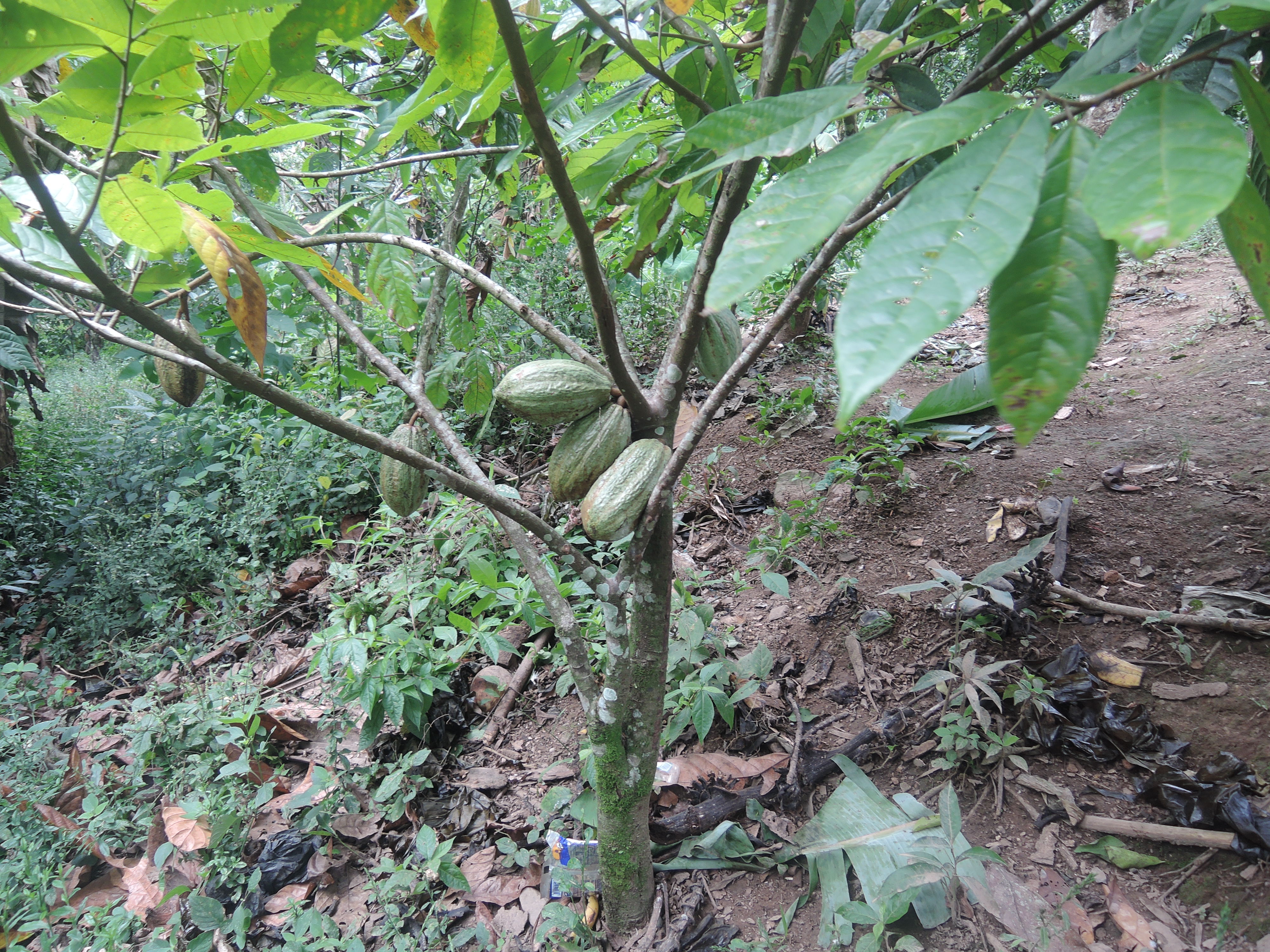
Cacao on a cacao tree, when it turns yellow you know it’s ripe.
After this point things got a little uncertain, as you’ve probably realized from the photos there isn’t a lot of flat ground in the region, and apart from Las Piedras there isn’t any other real landmarks. As a result we got lost, and ended up in a community we definitely hadn’t passed on the way there, then from here we got the wrong direction.
As it was starting to get close to sunset I was considering the need to ask a local if we could stay the night. Fortunately we crossed a man with a machete, and he told us we were going the wrong way, as a result we ended up walking with this man for about 10 minutes. Machetes on lone people don’t make me feel the most secure so I was happy when our paths did split again.

The cobbled main street of San Jose de Bocay.
From here we climbed another hill which provided a spectacular view back over Las Piedras, but maybe more importantly we could once again see San Jose de Bocay. And after taking a few more wrong turns, walking cautiously through a paddock of bulls, and crossing Rio Bocay once more we were back to the civilization on the edge of civilization, San Jose de Bocay, and just in time for dinner.

Final view of Las Piedras before making the decent back into Bocay.
This was my favorite day in all my travels, because it felt exactly how an adventure should feel, certainly I was happy to get back at the end of the day, but the experience is one I will hold close to me for the rest of my life. I can’t wait to make my next journey into both the known and unknown of Nicaragua and the world at large.
Getting to Bocay: Fly to Managua, 3 hour bus to Matagalpa or 4 hour bus to Jinotega, 6-8 hour bus from either to San Jose de Bocay (If you want to sit get there early, or else enjoy standing for a few hours).
The walk: This is an 8 hour return trip, find someone to guide you, or at least someone that speaks enough Spanish to make sure you are going in the right direction. You will also need a few liters of water and food. Also a few hundred Cordobas (10-20USD) in case you need to pay for assistance along the way.


 Clive Silcock