
Every man needs their Indiana Jones moment, mine came during a trip to Nicaragua last year. Not only was I in a foreign country, but also an area which was rarely visited by foreigners, and had the threatening rumors of rebel groups hiding in the mountains. It was in the setting of San Jose de Bocay, that I first saw the towering Piedras de Levay (Rocks of Levay) sitting on a mountain towering alluringly over the surrounding countryside.
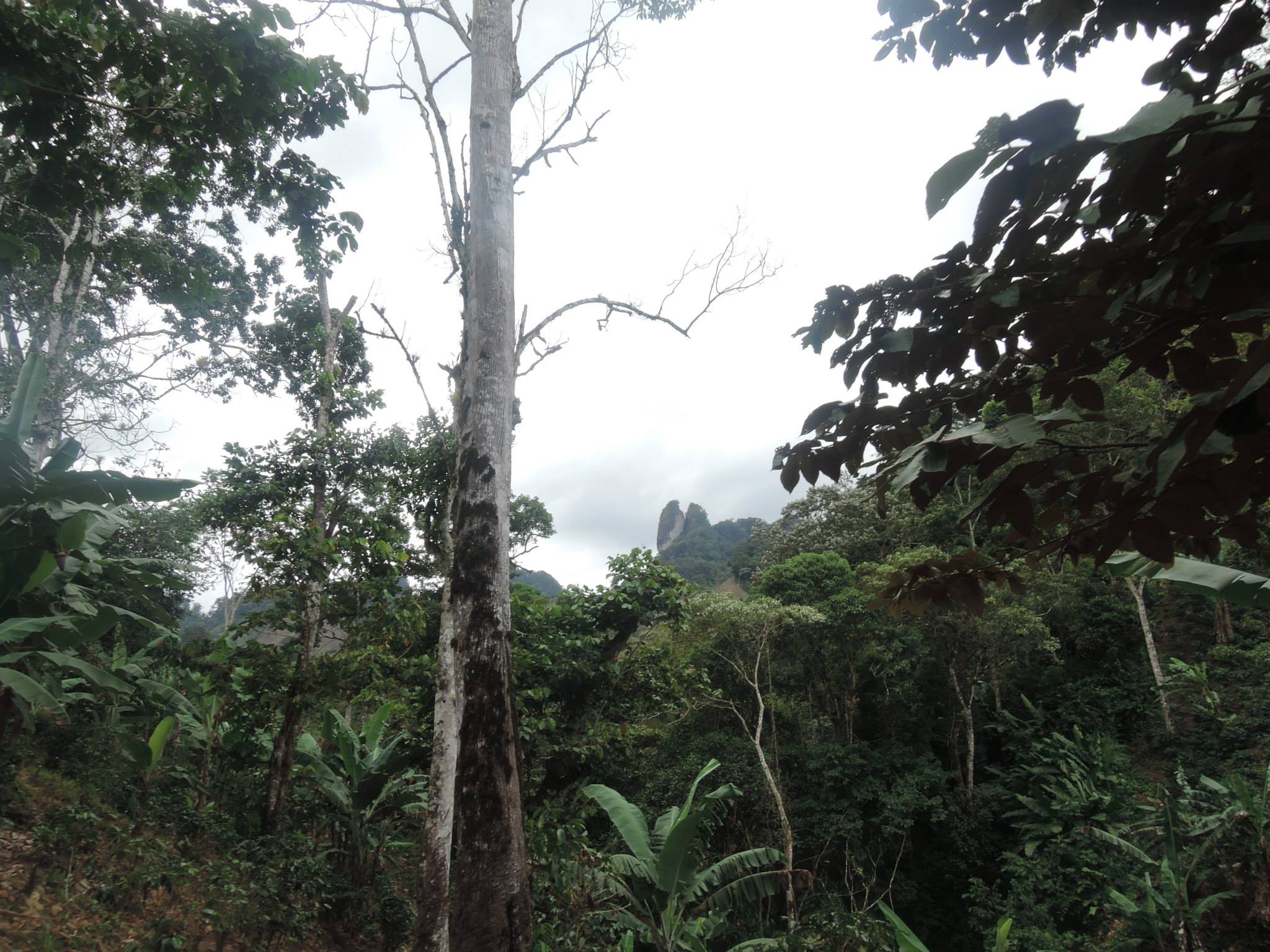
Las Piedras de Levay, set in the dense jungle of Northern Nicaragua.
The reason I first came to this country was part volunteering, part adventure, but predominantly to hone my poor Spanish which I had somehow been able to pass to intermediate level with in university a year earlier. In this mindset I was lucky enough to work in with a local English teacher Alberto, I worked with him on a weekly regime of education and travel.

Looking out over Rio Bocay and the countryside which surrounds San Jose de Bocay.
As part of this I visited the town of Bocay every weekend for two months straight making the 8 hour bus ride there from Jinotega each Friday and then returning on the Sunday for the same time. A trip filled with Latino music and English classics, which the locals didn’t seem to understand bu enjoyed all the same. Every now and then a vendor would hop on the bus with there fresh, or not so fresh food, depending on your luck.

Looking over the cobbled main street towards the Sandinista flagged hill.
San Jose de Bocay is a small rural town in the northern cordilleras of Nicaragua situated in the province of Jinotega. The town itself is situated beside Rio Bocay, a large river which can be crossed by canoe. Across the river is a hill which bears a giant Sandinista flag, acting both as a landmark and as a statement of who rules the land. The economy of the region is based primarily on cattle trade, along with the production of cafe, cacao, and frijoles (beans).
During these weekends we would spend the nights working with local English university students, who were becoming the first people to speak English at a conversational level, which was inspiring enough in itself. What had more impact was Saturday, each Saturday students would come to school for there one day of school a week, with some walking around 5 hours to get there at 7 am for the start of classes.

Juan Alberto “The Teacher” leading English classes on Saturday morning.
The spread of students was not just restricted to the students geography, with students representing an age range of between 14 and 40 in some classes. But all made their journey and a commitment to their education. Often I pondered how anyone could possibly learn through just one day a week, when the other six days were filled with 10 plus hours a day of work. But it is not a need to learn that draws students each week, it is a deep desire and sense that they can become something more if they do.
I was fortunate enough to not only help with the introductory English classes being taught, but also to participate in their Spanish classes. This was the great leveler, the thing that really made me feel a connection to these people and them to me. It gave us the chance to fail together, to improve together. More importantly it gave the students the opportunity to help me, because it’s not just the people in the developing countries, coming from a developed country we to need help, whether it’s in how to improve our own selves, or how we can learn to help others.

Some of the students who traveled from far and wide to attend class.
Always I was reminded of the poverty, the school itself had been flooded only a year before and the classrooms students were working out of were missing parts of their roofs. Whilst I was there I witnessed the students themselves with the help of Alberto, scraping together funds to repair their roofing and then rebuilding it themselves after the classes. This pride in their learning space, not required by anyone but their own desire for a better learning space, said to me much of the honor of the Nicaraguan people at every level of society.
As I’ve mentioned before, although the people I met were all friendly there is no doubt that as with any place if you look or speak to the wrong person the wrong way you can be in trouble. After classes most often we would return with the teach to the hotel where we were staying before it got to late, with rumors of army personnel missing and anti government retribution. One evening however we made a trip further into the wilderness to see a friend of the Alberto.
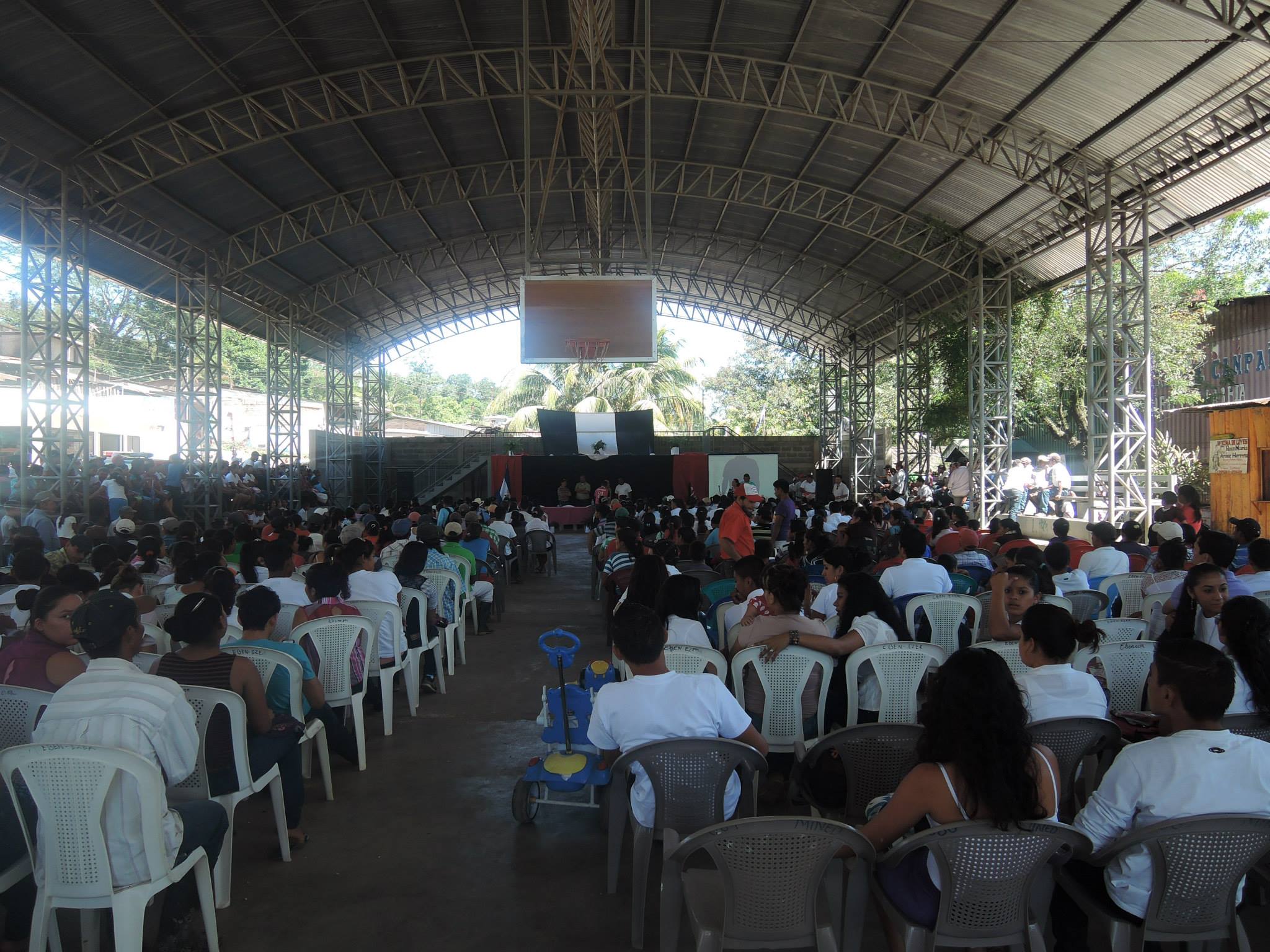
El Poli – The local meeting place for soccer, and local events, such as a Sandinista rally being held in this photo.
On the way back we stopped over at one of the students houses where they were in the process of building a better accommodation. It was whilst we were stopped here that I first saw Las Piedras, and every weekend after I asked about these rocks and how to get there. A natural formation seated looking over the whole region it was surprising I hadn’t seen them earlier, but even more surprising that no one I talked to had visited them.
From this point on reaching those rocks became the one thing I had to do before leaving Nicaragua… TBC
 Clive Silcock